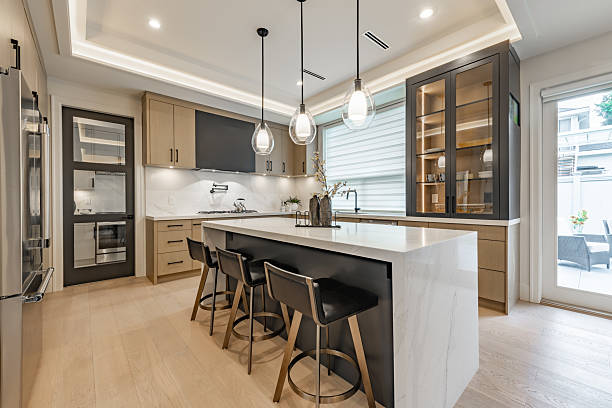
Kitchen Flooring Installation in Houston, TX

The right kitchen flooring can last decades with proper installation

Our flooring crew starts with a thorough subfloor assessment.

🔥 Subfloor Specialists
✅ All Floor Types
🏠 Licensed in TX
📞 Free Estimates
🏭

Materials

LVP, engineered hardwood, porcelain, ceramic, hardwood -- every product type, expertly installed for Houston kitchens.

🔧

Subfloor Prep

We assess, repair, and level every subfloor before installation -- the step most crews skip and every floor failure comes back to.

⏱

Installation Speed

Most kitchen floor installations complete in 1 to 3 days. We give honest timelines and protect your kitchen throughout.

Kitchen Flooring Services in Houston

Whether you need a full replacement or targeted repair -- JMT Kitchen Cabinet installs every floor type with the preparation and precision it deserves.

🏭

LVP & LVT Plank Flooring

Luxury vinyl plank and tile is the most practical kitchen floor choice: 100% waterproof, durable under heavy foot traffic, and available in realistic wood and stone visuals. We install floating and glue-down systems.

Details
🌳

Engineered Hardwood

Engineered hardwood gives the beauty of real wood with better dimensional stability. It resists seasonal moisture movement better than solid hardwood, making it a viable kitchen floor option in most climates.

Details
☐

Porcelain & Ceramic Tile

Tile is the most durable long-term kitchen surface. We handle large-format porcelain, classic ceramic, and patterned installations, with proper substrate assessment and deflection testing before every tile install.

Details
✨

Hardwood Refinishing

Existing hardwood floors can be sanded, stained, and refinished to like-new condition. We assess board integrity, fill gaps, sand smooth, and apply a durable finish coat matched to your kitchen's style.

Details
🔧

Subfloor Repair & Leveling

Soft spots, squeaky boards, high deflection, and unlevel areas are corrected before any new floor goes down. Self-leveling compound, sister joists, and substrate reinforcement are all within our scope.

Details
🔥

Heated Floor Systems

Electric radiant heat mats installed under tile create a warm floor surface in cold months. We handle the mat layout, thermostat wiring coordination, and tile installation over the system for a seamless result.

Details
Kitchen flooring installation in Houston by JMT Kitchen Cabinet

Why the Floor Under Your Floor Decides Everything

92%
Of floor failures trace back to subfloor
15+
Years installing kitchen floors
100%
Subfloor inspection on every job

The conversation about kitchen floors almost always starts with the surface -- and that instinct is understandable, because the finished surface is what you see and feel every day. But at JMT Kitchen Cabinet, we have seen enough flooring failures over the years to know that the surface material is rarely the problem. The subfloor is.

A healthy subfloor is flat, level within industry tolerances, structurally solid, and correctly thick for the floor type being installed. When any of those conditions is not met, the new floor pays the price. Tile cracks along grout lines when the subfloor has too much deflection under load. LVP develops gaps and hollow spots when it floats over an unlevel surface. Hardwood cups and warps when subfloor moisture content is not measured and managed before installation begins.

Our process starts with a full subfloor assessment: we walk the kitchen, probe for soft spots, measure levelness with a straightedge across multiple directions, check for squeaks that indicate loose fastening, and test moisture levels in wood subfloors with a calibrated moisture meter. What we find determines what prep happens before any new material goes down. In some cases, that means applying self-leveling compound to raise low areas. In others, it means adding a layer of 3/8-inch plywood over existing boards to bring the substrate up to the thickness tile installation requires. Occasionally it means repairing or sistering joists to address structural flex that would otherwise crack a tile floor within a year.

It is not the work that gets photographed -- but it is the work that determines whether your new kitchen floor is still looking perfect in ten years or developing problems in two. JMT Kitchen Cabinet does this prep right on every job because we stand behind what we install, and we are not interested in callbacks for floors that failed because the prep was skipped.

Call +1-866-441-2044 for a Free Floor Assessment
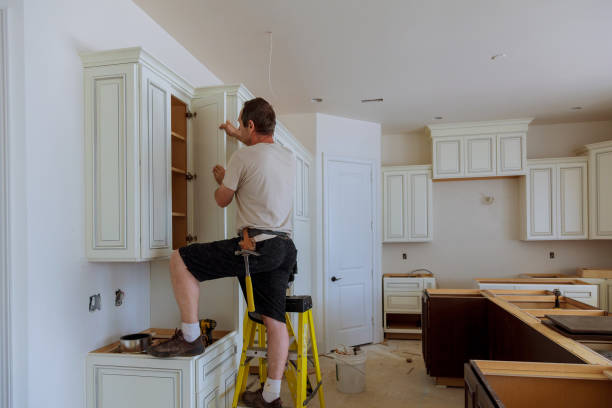
Subfloor Conditions That Affect Your Floor Choice

Not every material works on every subfloor.

Deflection and Tile

Ceramic and porcelain tile require a subfloor with minimal flex under load. The industry standard is L/360 deflection or better -- meaning for a 10-foot joist span, total floor deflection under load should not exceed 1/3 inch. Floors that do not meet this threshold crack grout and tile within months of installation. We test deflection before recommending tile and add structural support when needed.

Moisture and Wood Floors

Solid hardwood and engineered wood flooring must be acclimated to the job site and installed over a subfloor with a wood moisture content typically between 6% and 9%. Moisture content above this range causes boards to expand, cup, and buckle after installation. We measure subfloor moisture on every wood floor job and address the source of elevated moisture before proceeding.

Levelness for LVP

Luxury vinyl plank requires a subfloor that is flat within 3/16 inch over a 10-foot span. Dips and high spots in the subfloor create hollow sections under floating LVP that click when walked on, stress the click-lock joints, and eventually cause joint separation. We grind high spots and fill low areas before any LVP installation begins.

Thickness for Tile Over Wood

Tile installed over a wood subfloor requires a combined substrate thickness of at least 1-1/4 inches: typically 3/4-inch plywood plus a 1/2-inch concrete backer board. Skipping the backer board and tiling directly over plywood creates a surface that moves differently than the tile, breaking adhesive bonds within a year or two of regular use. We always install proper backer on wood subfloor tile jobs.

What Our Flooring Customers Say

★★★★★
What stood out immediately was that the JMT Kitchen Cabinet crew spent almost an hour just on the subfloor before they touched a single plank. They found a soft spot near the dishwasher that two other contractors had missed. The LVP they installed looks perfect and has not budged in 18 months.
SK
Samuel K.
Houston, TX
★★★★★
We had a tile floor installed by someone else and the grout started cracking within a year. The JMT Kitchen Cabinet team came in, explained the deflection problem the original installer missed, fixed the subfloor, and installed new tile that has stayed perfect. Worth every penny.
TR
Tina & Dave R.
Houston, TX
★★★★★
I wanted hardwood in my kitchen and was told by three contractors it was impossible but JMT Kitchen Cabinet took the time to measure moisture levels, treat the subfloor, and install engineered hardwood properly. It looks stunning and has held up perfectly through two years of cooking and cleaning.
OM
Odessa M.
Houston, TX

Kitchen Flooring FAQs

What flooring holds up best in a kitchen? +
Durability-wise, porcelain tile is the kitchen flooring benchmark. It is harder than ceramic, resists scratches and staining, and handles moisture with zero concern. The tradeoff is comfort -- tile is hard underfoot and cold without radiant heat. For a balance of durability, comfort, and ease of installation, LVP is the most popular choice in contemporary kitchens: it is 100% waterproof, extremely durable, comfortable to stand on for long cooking sessions, and available in convincing wood and stone looks. Engineered hardwood is the best choice when you want the warmth and value of real wood without the moisture sensitivity of solid hardwood. The right answer depends on your priorities, budget, and existing subfloor conditions, and we walk through all of them at the initial estimate.
Can I put hardwood in my kitchen? +
The short answer is yes -- but product and process matter enormously. Solid hardwood is not recommended for most kitchen installations because its dimensional stability under moisture exposure is limited -- it expands and contracts with seasonal humidity changes more than engineered products. Engineered hardwood, however, is dimensionally stable enough for kitchen use in most climates when installed over a properly prepared subfloor with measured and controlled moisture content. The key variables are the room's typical humidity range, the subfloor moisture content at installation time, and the species and construction of the engineered product. We assess all of these before recommending engineered wood for your kitchen.
How important is subfloor preparation? +
Subfloor preparation is the single most important factor in a floor installation. The surface material can be perfectly installed, but if the subfloor has excessive flex, moisture problems, unlevel areas, or insufficient thickness for the chosen material, the floor will fail on its own timeline. Tile will crack. LVP will gap at the joints or develop hollow spots. Hardwood will cup and buckle. We devote serious time and attention to subfloor assessment and correction on every job because it is the only way to guarantee the results we are willing to put our name on.
What is deflection and why does it matter for tile? +
Deflection is the amount a floor system flexes under a load. Tile is a rigid material that cannot move without cracking. When you install tile over a floor system that flexes more than the tile's tolerance allows, the tile and grout joints absorb that flex and eventually crack. The tile industry standard for a tile-ready floor is L/360 deflection: for a given joist span, total deflection under design load should not exceed that span divided by 360. In practical terms, a 10-foot joist span should deflect no more than about 1/3 inch under full design load. When a floor does not meet this threshold, we correct the structure by adding blocking, sistering joists, or applying additional substrate layers before tile installation proceeds.
How long does kitchen floor installation take? +
Timeline varies by floor type and subfloor condition. A straightforward LVP or engineered hardwood installation in an average-sized kitchen typically completes in one to two days. Tile installations take longer because the thin-set needs to cure -- usually 24 hours -- before grouting, making a two to three day timeline typical for tile. Any subfloor repairs add time before the finish floor installation can begin. We give you a full, honest timeline estimate at consultation based on your specific kitchen size, floor type, and subfloor condition -- never an optimistic guess that extends once we start the job.
Can I walk on the floor the same day? +
It depends entirely on the floor type installed. LVP and engineered hardwood floating floors can typically be walked on carefully within a few hours of installation, though we recommend waiting until installation is fully complete. Glue-down LVP and hardwood need 24 hours of cure time before foot traffic. Tile installations require the thin-set to cure before grouting -- typically 24 hours -- and the grout itself needs 24 to 72 hours before the floor should be used normally. Heated floor systems have extended cure times because the substrate cannot be heated during the curing period. We walk you through the specific care and use schedule for your floor type before we finish the job.

Start Your Kitchen Floor Project in Houston

JMT Kitchen Cabinet serves Houston homeowners with expert kitchen floor installation and real subfloor expertise.

Schedule an Assessment

Our Services in Houston, TX

Houston (/ˈhjuːstən/ i; HEW-stən) is the most populous city in Texas and in the Southern United States. It is the fourth-most populous city in the United States after New York City, Los Angeles, and Chicago, and the sixth-most populous city in North America. With a population of 2,302,878 in 2022, Houston is located in Southeast Texas near Galveston Bay and the Gulf of Mexico; it is the seat and largest city of Harris County and the principal city of the Greater Houston metropolitan area, which is the fifth-most populous metropolitan statistical area in the United States and the second-most populous in Texas after Dallas–Fort Worth. Houston is the southeast anchor of the greater megaregion known as the Texas Triangle.

Zip Codes in Houston, TX that we also serve: 77069 77068 77061 77060 77063 77062 77065 77064 77067 77066 77346 77571 77036 77037 77034 77035 77032 77033 77030 77031 77038 77449 77489 77044 77043 77042 77204 77598 77018 77019 77015 77016 77017 77010 77011 77012 77013 77094 77093 77092 77345 77547 77025 77024 77027 77026 77021 77020 77023 77022 77029 77028 77096 77090 77091 77098 77099 77078 77079 77072 77073 77070 77071 77076 77077 77074 77075 77407 77047 77046 77045 77041 77040 77048 77336 77339 77338 77003 77002 77007 77006 77005 77004 77009 77008 77450 77082 77084 77089 77088 77083 77081 77080 77087 77086 77085 77053 77054 77055 77056 77057 77058 77059 77396 77051 77506 77504 77001 77052 77201 77202 77203 77205 77206 77207 77208 77209 77210 77212 77213 77215 77216 77217 77218 77219 77220 77221 77222 77223 77225 77226 77227 77228 77229 77230 77231 77233 77234 77235 77236 77237 77241 77242 77243 77244 77245 77248 77249 77251 77252 77253 77254 77255 77256 77257 77259 77261 77262 77263 77266 77269 77270 77271 77272 77273 77274 77275 77282 77284 77287 77288 77289 77291 77292 77293 77297 77299 77315 77325 77411 77014 77095

Cities Close To Houston, TX That We Also Serve


Kitchen Flooring Express #1
★ 4.9 (120+ Reviews)
Dispatch Center, TX
Kitchen Flooring Express #2
★ 4.9 (120+ Reviews)
Dispatch Center, TX
Kitchen Flooring Express #3
★ 4.9 (120+ Reviews)
Dispatch Center, TX
Kitchen Flooring Express #4
★ 4.9 (120+ Reviews)
Dispatch Center, TX
Kitchen Flooring Express #5
★ 4.9 (120+ Reviews)
Dispatch Center, TX
Kitchen Flooring Express #6
★ 4.9 (120+ Reviews)
Dispatch Center, TX
📞
🟢 Techs On Duty in Houston, TX Call +1-866-441-2044